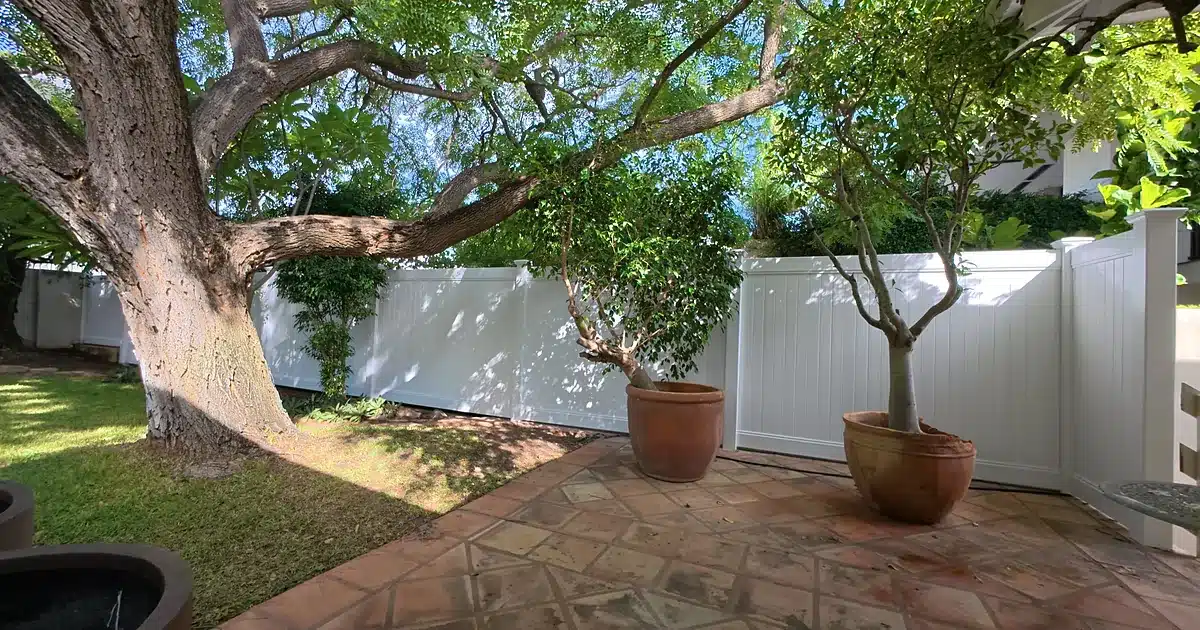
There are few worse feelings than looking out at an empty yard and realising your dog is gone. A determined dog will jump, dig, climb or squeeze its way out of a fence that was not built with them in mind, and in Perth an escaped dog is not just heartbreaking, it is a genuine danger near roads and a breach of the WA law that requires your dog to be confined to your property. The good news is that dog-proofing a fence is very doable once you know where dogs actually get out. In this guide we cover the right height for your breed, how to stop jumping and digging, the gaps and materials that truly hold, secure gates, and simple yard prep that keeps your furry friend safely at home.
Why Dogs Escape The Yard
Before you build higher, it helps to understand why your dog is trying to get out, because the fix depends on the cause. Boredom and excess energy are the biggest culprits: an under-exercised dog with nothing to do will invent its own entertainment, usually on the other side of the fence. Others are driven by a strong prey drive, bolting after cats, small animals or passing wildlife, or by separation anxiety when they are left alone for long periods. Some react to triggers like other dogs, a passing dog walker or cars going by, while a few are simply curious escape artists testing the boundary. Match the barrier to the behaviour and you will succeed. Build blindly and a clever dog will still sniff out the weak spot.
Best Fence Height For Dogs
Height is your first line of defence, and the right one depends on your dog. As a rough guide, small breeds are usually held by a 1.2 metre fence, medium dogs need around 1.5 metres, and large or athletic breeds want a full 1.8 metre fence. Serious jumpers and climbers, think kelpies, huskies and many working breeds, can clear or scale even 1.8 metres, so they often need an inward-angled extension on top as well. Remember that in Perth a standard dividing fence maxes out at 1.8 metres without council approval, so for a real leaper the smart move is not just raw height but removing their run-up and adding an anti-jump top, rather than trying to build an illegally tall wall.
Stop The Jump: Angled Extensions And Rollers
For a dog that jumps, the trick is taking away both the grip and the launch. An extension angled inward at 45 to 60 degrees leans the top of the fence back over the yard, so a jumping dog cannot get a paw-hold on the edge. Anti-jump rollers, sometimes called coyote rollers, are a spinning bar mounted along the top: when your dog tries to grab the edge, the bar simply rolls them back down, and they are easily installed on most fences. Just as important, move anything your dog uses as a launch pad, kennels, benches, bins, pot plants or the air-con unit, at least a metre back from the fence line, because a running start or a handy step up is what gets most jumpers over.
Dig-Proofing: Stop Your Dog Going Under
Plenty of dogs go under rather than over, and Perth’s soft, sandy soil makes digging easy work. The most reliable fix is to extend the barrier below ground. We can set the fence footings in concrete, bury galvanised mesh along the base, or install an L-footer, a strip of mesh bent outward and pegged flat just under the soil, so when your dog digs down it hits wire instead of freedom. A row of pavers or a concrete mowing strip along the fence line works well too, and doubles as a tidy edge for the lawn. For a committed digger, going 200 to 300 millimetres below the surface is what turns a daily escape act into a solved problem.
Mind The Gaps: Spacing That Keeps Dogs In
A fence can be plenty tall and still leak, because dogs are experts at finding a gap. Puppies and small breeds can squeeze through surprisingly narrow spaces, so vertical gaps should be no wider than about 75 to 100 millimetres for small dogs, and tighter again for pups. Check the bottom rail for a gap big enough to wriggle under, and keep an eye on the sides of gates, where dogs love to test their luck. A solid fence like Colorbond removes the problem entirely, with no gaps and nothing to see through, which is why it is our first pick for escape-prone dogs and one of the most popular dog fence ideas we install across Perth.
Chew-Proof And Climb-Proof Materials
Material matters just as much as height. Timber and PVC can be chewed, scratched and clawed apart by a determined dog, and chain-link or wire mesh hands paws an easy ladder to climb. For dogs that chew or climb, metal fencing is the answer: Colorbond, aluminium and steel present a smooth, hard face with no traction and nothing to gnaw on. A flat Colorbond sheet offers no paw-holds at all, so there is simply nothing to grip on the way up. If you love the look of timber, a smooth metal capping along the top and a smooth interior face can remove the climbing points while keeping the style you want. The toughest, longest-lasting dog fence is almost always a solid metal one.
Secure Gates And Latches
Gates are the weak link in most dog-proof fences, because they get used, left ajar and worked on by clever paws and noses. Fit a self-closing, self-latching gate so it shuts and locks every time, even when the kids forget, and choose a latch a dog cannot nose or paw open, mounted well out of reach. Check that the gap under and beside the gate is small enough that your dog cannot squeeze through or dig out at the edge. A spring hinge paired with a secure, dog-proof latch turns the single most likely escape route into a barrier you can actually rely on.
Prep The Yard And The Dog
The best physical barrier works even better with a bit of yard and behaviour prep. Blocking your dog’s view with solid slats or a screen calms a dog that reacts to triggers on the other side, because out of sight really can mean out of mind. Planting a dense hedge or setting a low buffer fence a metre inside the boundary removes the run-up a jumper relies on. Just as important is tiring your dog out: daily walks, play, fetch and mental stimulation toys burn off the excess energy and boredom that drive most escapes in the first place. Until the fence is fully secure, do not leave your dog unattended in the yard for long stretches. A tired, content dog with nothing to watch is a dog that happily stays home.
Our Recent Dog-Proof Fencing Work In Perth
A dog-proof fence has no gaps, no footholds and nothing to chew. A few recent secure boundaries we have built:
Engineered Steel Battens That Keep The Dog In: These millimetre-perfect satin black steel battens were raked to follow the site and set on solid footings, holding a smooth, gap-free face that a dog cannot squeeze through, climb or chew.
Full-Height Secure Perimeter: A tall garrison perimeter with self-latching gates closed off every access point, ideal for an athletic dog that would clear a lower boundary in a single bound.
Gap-Controlled Pet-Safe Enclosure: We enclosed this property on every side with tight, gap-controlled aluminium slats and matching gates, giving the owners a yard that safely holds both dogs and kids.
Frequently Asked Questions
The dog-proof fencing questions Perth pet owners ask us most:
Keep Your Dog Safe And Home
A truly dog-proof fence comes down to a few things working together: the right height for your breed, no gaps to squeeze through, a chew and climb-proof material like Colorbond, dig protection at the base, secure self-latching gates, and a yard set up to remove the launch pads and the temptation. Get those right and you can relax knowing your furry friend is safe at home rather than dodging traffic down the street. Whether your dog is a jumper, a digger or a chewer, we have contained them all. Get in touch today for expert advice and a free, no-obligation quote, and let us build you a fence that keeps your dog exactly where they belong.

With years of hands-on experience in the fencing industry, Niels founded FencrGatr with a mission to deliver premium fencing solutions backed by exceptional service across Perth.